
Made in USA since 1986
Precision Carbide Tipped Cutting Tools
Reamers, drills, counterbores, cutters and end mills ground in our own plant — standard sizes and specials, engineered for real production conditions.

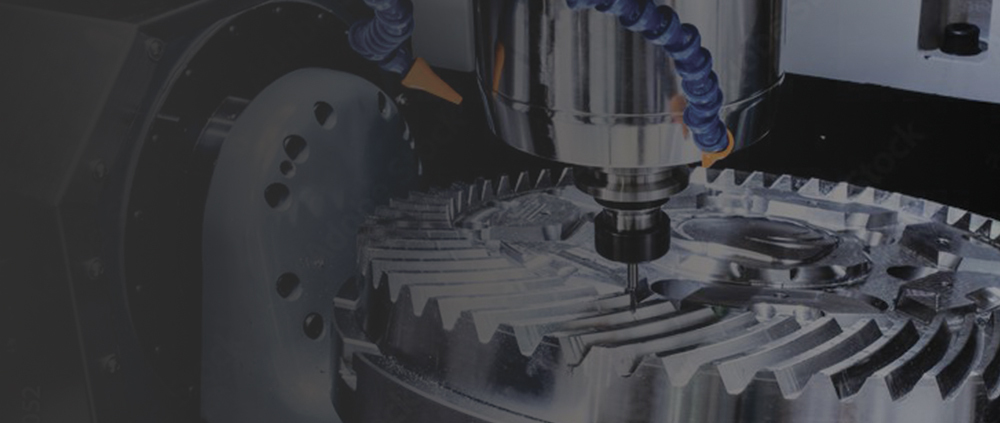

Every family below is stocked as a standard line and can be modified for diameter, length, flute count, shank style, corner condition or carbide grade. If the print calls for something outside the catalogue, our engineering group builds it.
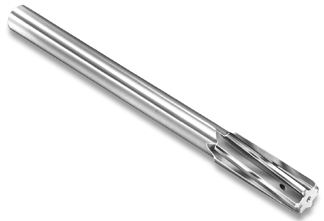

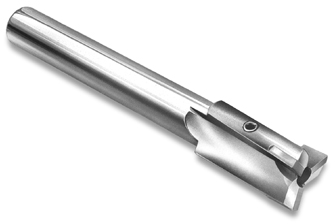
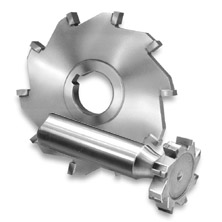
Starting SFM and chip load values by workpiece group — free machining steels, alloy steels, stainless, cast iron, aluminium, brass, bronze and plastics — plus reaming stock allowance and coolant recommendations. Use it to dial in the first cut instead of guessing.
Open the ChartsSend a print or describe the feature. We review geometry, carbide grade and grind sequence before committing to manufacture.
Custom Tool Engineering
Dimensional tables, tool numbers, flute counts and shank data for every standard family in one reference.
General InformationSolid carbide is not always the right answer. A brazed carbide tip puts premium grade carbide exactly where the metal is removed, while the alloy steel body absorbs vibration and shock. For interrupted cuts, cored castings, older machines, long reaches and larger diameters, that construction usually outlasts a full carbide body — and costs considerably less per tool.
| Condition | Carbide Tipped | Solid Carbide |
|---|---|---|
| Interrupted / scaly cuts | Preferred — steel body absorbs shock | Edge chipping risk |
| Large diameters (over ½") | Lower cost, strong body | High tool cost |
| Less rigid machines | Tolerates deflection | Needs high rigidity |
| Very high SFM finishing | Good | Best — maximum stiffness |
| Tight-tolerance small holes | Good with proper allowance | Best for micro sizes |
| Reconditioning | Re-sharpenable in most designs | Limited by core diameter |
Guidance compiled from Rock River Tool application engineering experience. Final selection should always consider fixture rigidity, coolant delivery and part tolerance.
Grinding, brazing, inspection and finishing happen under one roof. That is how we keep tool geometry repeatable from order to order and answer technical questions without going through a third party.
Coating selection should follow the workpiece and the coolant strategy, not habit. We advise on the right surface treatment for abrasive cast iron, sticky aluminium alloys, hardened steels and dry or MQL machining, then apply it to the finished geometry.
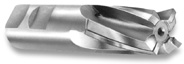
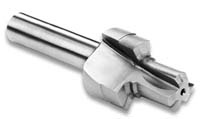
Port contour cutters to S.A.E. and MS specifications for manifolds, valve bodies and cylinder blocks.
Aircraft reduced shank counterbores, reamers and drills for tight-access structural work.
High-volume reaming, counterboring and slotting in cast iron, forged steel and aluminium.
Standard families off the shelf plus fast specials when a print does not match a catalogue tool.
Large diameter tipped tooling where solid carbide is uneconomical or too brittle.
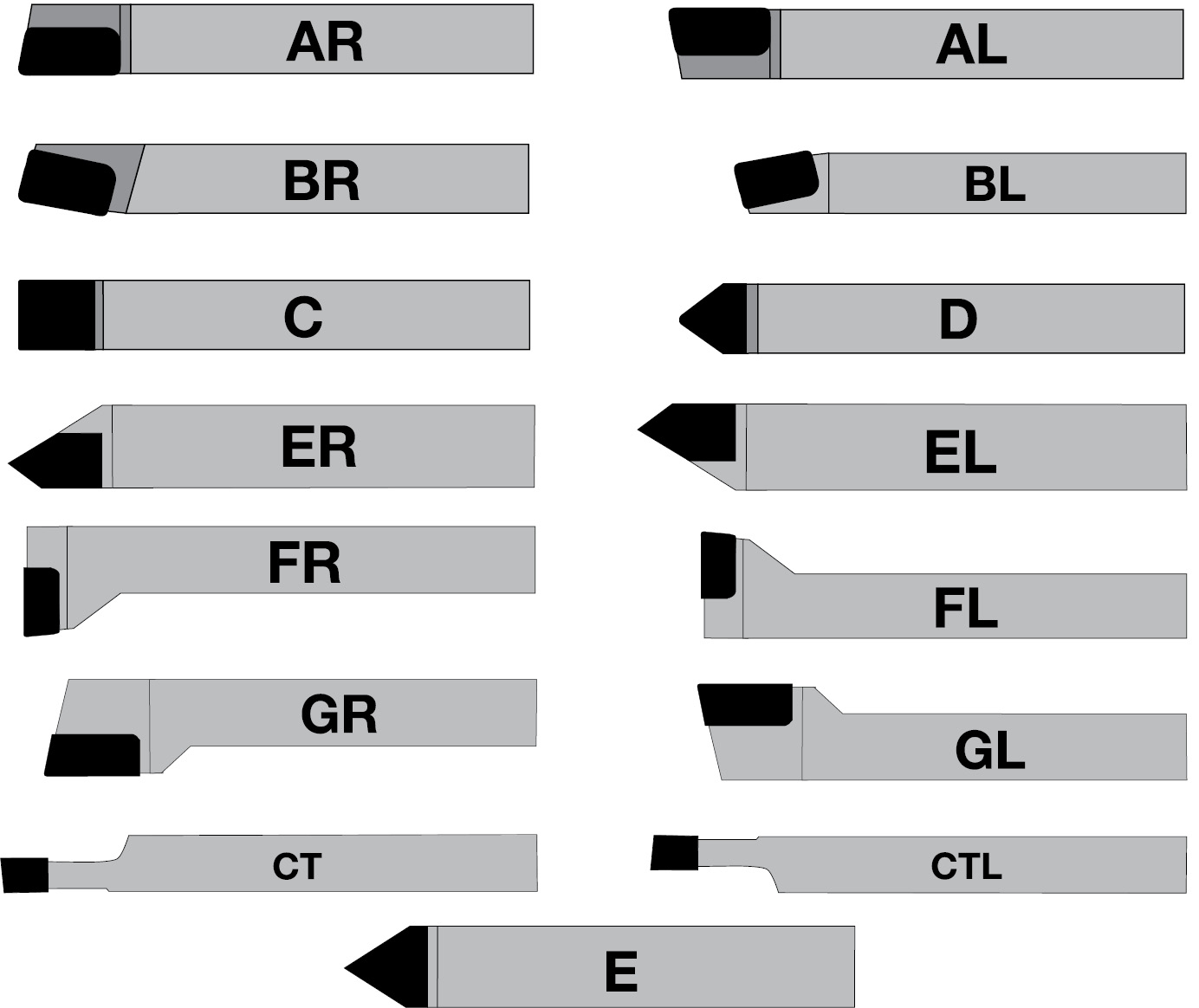
S.A. series single point tools and brazed carbide geometry for small-part turning.
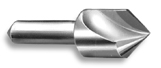
Keyseat cutters, slitting saws and single angle cutters for fixture and die detail work.
Catalogue tooling and private specials supported with technical data for resale worldwide.

Rock River Tool, Inc. has been manufacturing carbide tipped cutting tools in the United States since 1986 and is one of the established producers of tipped tooling in the industry. American manufacturing is not just a label for us: it is how we hold geometry tolerances, keep material traceability, and give buyers a direct line to the people who actually grind the tool.
Purchasing teams and distributors work with one point of contact for technical data, tool numbers, modifications and status — no translation layer, no unknown sub-supplier.
The questions our application engineers answer most often from machinists, buyers and distributors.
A carbide tipped tool brazes premium carbide only where the cutting happens, while the body stays alloy steel. That combination delivers carbide wear resistance at the edge with far better shock tolerance and lower cost per tool than a full solid carbide body. It is the preferred choice for interrupted cuts, cast iron, abrasive non-ferrous alloys, less rigid machines, and larger diameters where solid carbide becomes expensive and fragile.
Standard chucking reamers are ground to nominal size, with plus tolerance available on request. Achieved hole size, roundness and finish depend on pre-drill allowance, rigidity, coolant delivery and speed. As a practical starting point, leave roughly 0.010 in. to 0.015 in. of stock on diameter for reaming and follow the material group values in our speeds and feeds charts.
Yes. Special geometry, non-standard diameters and lengths, step tools, form tools, coolant-through designs, alternate carbide grades, shank modifications and coatings are all produced in house. Send a print, a sketch, or the standard tool number you want modified and our engineering team reviews manufacturability before quoting.
Tools are tipped with application-matched grades: C-2 class carbide such as our 883 premium grade for cast iron, aluminium and other non-ferrous materials, and C5/C6 class carbide such as our 370 premium grade for steels. Matching grade to workpiece is the fastest single improvement most shops can make to tool life.
Yes. Our port contour cutter line covers S.A.E. straight thread O-ring boss ports to MS16142, J514F and J1926, along with MS33649 integral reamer pilot port cutters in straight shank styles. Counterbore lines include capscrew and aircraft reduced shank configurations commonly called out on aerospace prints.
Yes. We regularly support overseas distributors and OEM purchasing teams with dimensional data, tool numbering and specials documentation. Contact our team with your requirement, target material and annual volume, and we will advise on the most suitable standard family or special design.
Our team will point you to the right standard tool — or engineer the special that fits your operation. Phone support is available Monday to Friday, 7:00am – 5:30pm CDT.