
Rock River Tool, Inc.Precision Cutting Tools
Technical Support(800) 345-8924
Talk to an Engineer Choosing the right Aircraft Reduced Shank Counterbores can influence hole accuracy, tool life, and assembly quality across demanding aerospace projects. This guide examines seven strong options for global buyers, based on practical selection factors rather than marketing claims. Each counterbore should be assessed for cutting geometry, reduced shank dimensions, material compatibility, surface finish, and concentricity. Small details matter.
Aircraft structures often involve aluminum alloys, titanium, composites, and layered materials. A tool that performs well in aluminum may struggle with heat and chip evacuation in titanium. Buyers should review pilot stability, cutting-edge sharpness, coating technology, and tolerance data before ordering. Supplier experience also deserves attention. Reliable manufacturers normally provide inspection records, material information, batch traceability, and clear technical support. Those documents can prevent costly uncertainty.
This overview compares seven counterbores suitable for different production environments, from maintenance workshops to high-volume manufacturing lines. The selection is not a universal ranking. Spindle speed, feed rate, coolant practice, and operator technique can change results significantly. A seemingly excellent tool may disappoint when its pilot does not match the existing hole. That limitation is easy to overlook. It is worth testing sample tools on the actual workpiece before committing to larger quantities. Global buyers should also confirm packaging quality, lead times, replacement availability, and export documentation. Performance comes first. However, dependable supply often decides whether a tool remains useful beyond one successful trial.
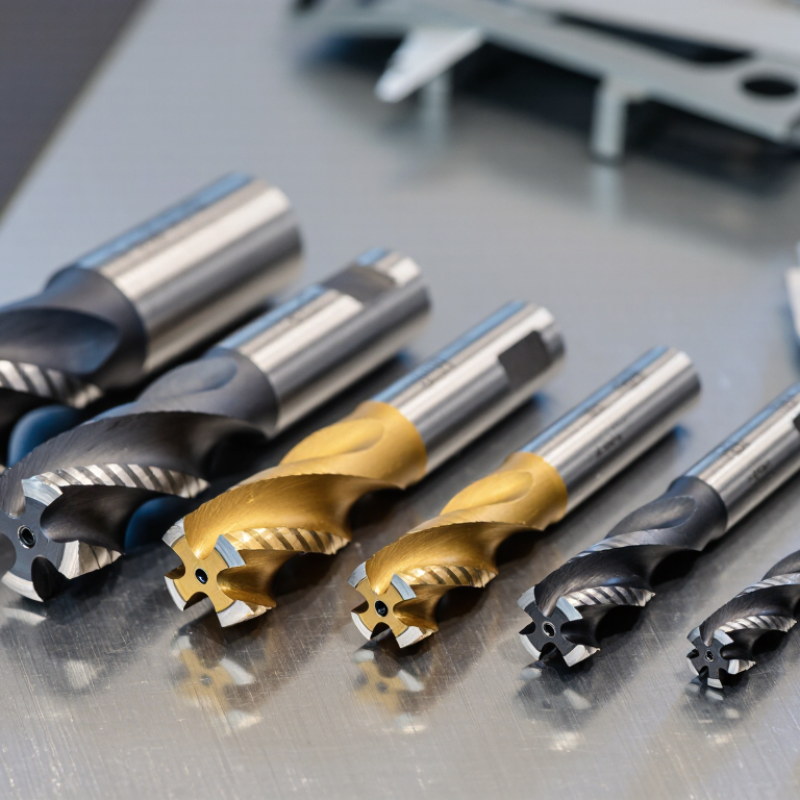
What Aircraft Reduced Shank Counterbores Are and Where They Are Used
Aircraft reduced shank counterbores are cutting tools for enlarging existing holes to a controlled, flat-bottomed recess. This recess seats a fastener head below or flush with the surrounding surface. Their slimmer shanks improve access inside narrow frames, ribs, skins, and assembled structures. The cutter usually includes a pilot, cutting edges, and a reduced-diameter body for better clearance. Small dimensions matter.
These tools are common in airframe assembly, maintenance, repair, and component manufacturing. Technicians use them around access panels, seat tracks, wing structures, landing-gear fittings, and interior brackets. A reduced shank design can reach holes near flanges or obstructed joints where standard tools may collide. In practice, feed control, chip evacuation, and pilot fit are critical. Excessive pressure can damage thin aluminum skins or produce an uneven seat.
Industry demand supports careful tool selection. The International Air Transport Association reported 4.96 billion expected air travelers in 2024, increasing pressure on maintenance capacity and turnaround speed. The International Civil Aviation Organization has also reported continuing long-term growth in global air transport activity. These trends do not make every counterbore suitable. Tool material, diameter tolerance, coating, and shank clearance must match the application. A 2024 aerospace tooling review noted that repeatability and reduced rework remain major production priorities. That sounds obvious, but field conditions often complicate it. Inspect the recess under proper lighting, verify fastener seating, and reconsider the tool when burrs appear early.
| No. | Recommended Configuration | Typical Cutting Diameter | Typical Pilot Diameter | Reduced Shank Size | Typical Tool Material | Best Application | Advantages | Important Selection Criteria |
|---|---|---|---|---|---|---|---|---|
| 1 |
Compact Small-Diameter Counterbore
Precision access
|
6.35 mm (0.250 in) |
3.18 mm (0.125 in) |
6.35 mm (1/4 in) |
Cobalt high-speed steel or solid carbide | Small aircraft panels, instrument brackets, light-access holes and thin sheet assemblies | Fits compact drill motors and provides good control in restricted spaces | Use a short pilot and controlled feed to prevent pilot chatter in thin material |
| 2 |
Small Fastener-Seat Counterbore
Light structures
|
7.94 mm (0.313 in) |
4.17 mm (0.164 in) |
6.35 mm (1/4 in) |
Cobalt high-speed steel | Small screw and rivet-head recesses in aluminum alloy skins and brackets | Good balance between cutting capacity, portability and tool rigidity | Confirm the pilot diameter and counterbore depth against the fastener head drawing |
| 3 |
General-Purpose Aerospace Counterbore
Most versatile
|
9.53 mm (0.375 in) |
4.83 mm (0.190 in) |
9.53 mm (3/8 in) |
Cobalt high-speed steel or carbide-tipped | Aircraft skin repairs, frames, ribs, access covers and general structural assembly | Suitable for a broad range of common aerospace maintenance operations | Choose a piloted design when concentricity with the existing fastener hole is critical |
| 4 |
Medium-Diameter Structural Counterbore
Structural work
|
12.70 mm (0.500 in) |
6.35 mm (0.250 in) |
9.53 mm (3/8 in) |
Carbide-tipped or cobalt high-speed steel | Larger brackets, doublers, fittings and structural members made from aluminum or titanium alloys | Provides increased head clearance while retaining a smaller shank for portable equipment | Use rigid fixturing and appropriate coolant or lubrication when machining titanium |
| 5 |
Deep-Recess Counterbore with Pilot
Controlled depth
|
15.88 mm (0.625 in) |
7.94 mm (0.313 in) |
12.70 mm (1/2 in) |
Carbide-tipped or solid carbide | Deep head recesses, thick fittings and assemblies requiring accurate shoulder depth | Supports repeatable counterbore depth when used with a stop collar or depth-control system | Check flute length, pilot engagement and minimum wall thickness before machining |
| 6 |
Large-Seat Reduced-Shank Counterbore
Large fasteners
|
19.05 mm (0.750 in) |
9.53 mm (0.375 in) |
12.70 mm (1/2 in) |
Carbide-tipped | Large structural fastener heads, landing-gear fittings and heavy aircraft support components | Creates a broad, flat-bottom recess while remaining compatible with common portable tool holders | Verify machine torque, workholding strength and chip evacuation for the larger cutting load |
| 7 |
Large-Diameter Production Counterbore
High-volume work
|
25.40 mm (1.000 in) |
12.70 mm (0.500 in) |
12.70 mm (1/2 in) |
Solid carbide or carbide-tipped | Production drilling cells, major repair stations and thick aerospace components | High wear resistance and stable cutting performance when machine rigidity is sufficient | Use conservative cutting parameters and confirm spindle capacity before operation |
It enlarges an existing hole into a controlled, flat-bottomed recess. The recess allows a fastener head to sit below or flush with the surface. Small tool dimensions matter.
Its slimmer body improves access inside narrow frames, ribs, skins, and assembled structures. It can reach holes near flanges or obstructed joints. Standard tools may collide.
Technicians use them during airframe assembly, maintenance, repair, and component manufacturing. Typical locations include access panels, seat tracks, wing structures, landing-gear fittings, and interior brackets.
Compare cutting diameter, pilot diameter, shank size, flute count, and overall length. Check shank concentricity carefully. Small runout errors can enlarge thin panels.
Aluminum, titanium, and composites require different feed rates, cutting temperatures, and chip-control methods. Tool edges may wear differently. One setting cannot fit every material.
Excessive pressure can damage thin aluminum skins or create an uneven recess. It may also increase burrs and reduce fastener seating quality. Less pressure is sometimes safer.
Inspect the recess under strong, even lighting. Verify fastener seating and look for burrs, chatter marks, or uneven depth. A quick visual check can miss small errors.
No. A smaller shank improves clearance but may increase vibration and reduce stability. Portable drills can reveal this quickly. The trade-off is easy to underestimate.
Request runout data, surface-finish results, and recommended cutting parameters. Test several holes and record tool life, burr formation, hole depth, and operator feedback. Results may be imperfect.
Reconsider the tool when burrs appear early, vibration continues, or fasteners seat unevenly. Check pilot fit and chip evacuation before blaming the operator. That detail matters.
Aircraft Reduced Shank Counterbores are specialized cutting tools designed to create clean, precise recesses for socket-head screws, fasteners, and related hardware in aerospace and other demanding manufacturing applications. Their reduced shank design improves access in compact work areas while supporting stable, accurate machining. This article explains where these counterbores are used and compares key specifications, including cutting diameter, pilot size, shank dimensions, flute design, material, coating, tolerance, and expected service life.
It also compares seven leading counterbore options according to performance, durability, hole quality, and application flexibility. Buyers will learn how to match counterbore geometry and cutting materials with aluminum, titanium, composites, and other workpiece materials, as well as how to select the right tool for different hole depths and fastener requirements. Finally, the guide outlines important global purchasing considerations, including dimensional standards, quality control, pricing, delivery reliability, documentation, customization, and supplier technical support.